Have you ever been walking through your house late at night when you suddenly hear a tiny creak? Even though you know it’s probably just the house settling, your heart beats a little faster. Or maybe you’ve stared into a dark room and felt like someone—or something—was there, even when logic told you otherwise.
If that sounds familiar, you’re far from alone.
Fear of the dark is one of the oldest and most common human experiences. It affects children and adults alike, and it isn’t a sign of weakness or an overactive imagination. In fact, it’s deeply rooted in how our brains evolved to keep us alive.
If you’re fascinated by the science behind human instincts, you may also enjoy our article on The Great Filter: Why Haven’t We Found Aliens Yet?, which explores another mystery about humanity’s place in the universe.
Let’s take a closer look at why darkness makes us uneasy and why this ancient survival instinct still follows us today.
When Darkness Meant Real Danger
It’s easy to forget how different life was before electricity. Imagine living tens of thousands of years ago. When the sun disappeared, so did your ability to see what was happening around you. There were no streetlights, flashlights, or sturdy homes to keep predators out.
Nighttime belonged to animals that could hunt in the dark. Big cats, wolves, and other predators had a huge advantage over humans once daylight faded. If our ancestors ignored strange noises or movement in the darkness, they risked becoming someone’s dinner.
Over countless generations, the people who stayed alert at night were more likely to survive and pass those cautious instincts on to their children. According to the Smithsonian Human Origins Program, early humans developed behavioral adaptations that increased their chances of survival in unpredictable environments.
That instinct still lives inside us today.
Your Brain Doesn’t Like Uncertainty
Humans depend on vision more than any other sense. When the lights go out, your brain suddenly loses a huge amount of information about the world around you. Instead of assuming everything is perfectly safe, it does something much smarter from a survival perspective—it prepares for the worst.
Think about it this way. If your ancestors mistook a shadow for a predator, they might have wasted a few moments being cautious. But if they ignored a real predator hiding in the dark, they probably wouldn’t get a second chance.
From an evolutionary standpoint, being overly cautious was the safer strategy.
Meet the Amygdala: Your Brain’s Alarm System
Hidden deep inside your brain is a tiny structure called the amygdala. You can think of it as your internal security guard. Its job is to constantly scan for possible danger. When you’re in a dark environment where you can’t clearly see what’s around you, the amygdala becomes more alert.
That’s why you might notice the following:
- Your heart beating faster
- Your muscles tensing up
- Your breathing becoming quicker
- Every little sound suddenly seeming much louder
These reactions aren’t random. They’re your body’s way of preparing to react if something goes wrong. Thousands of years ago, that response could have saved your life.
Why Shadows Seem Like Monsters
Have you ever mistaken a pile of clothes for a person standing in your room? Almost everyone has.
Our brains are amazing pattern-recognition machines. When we don’t have enough visual information, we naturally fill in the blanks.
In bright daylight, your brain easily recognizes familiar objects. In darkness, those same objects become unclear. A hanging jacket can suddenly resemble a person. A tree branch scraping a window can sound like footsteps.
The less information your brain has, the harder your imagination works to complete the picture. Sometimes, it gets things hilariously wrong.
Why Kids Are More Afraid of the Dark
Children often fear darkness more intensely than adults, and there’s a good reason for that. Young children have vivid imaginations but less experience separating fantasy from reality. A shadow can easily become a monster. A strange noise can become an invisible creature.
As children grow older, they gradually learn that darkness itself isn’t dangerous. Even so, many adults still feel uneasy walking through an unfamiliar parking lot or hiking alone after sunset.
That ancient instinct never completely disappears.
When Fear Becomes a Problem
Feeling uncomfortable in a dark alley or unfamiliar place is completely normal. But for some people, the fear becomes much stronger.
This condition is known as nyctophobia, an intense fear of darkness that can interfere with everyday life.
Someone with nyctophobia may:
- Sleep with lights on every night
- Avoid going outside after dark
- Experience panic attacks in dark places
- Feel overwhelming anxiety whenever the lights go out
The good news is that treatments like Cognitive Behavioral Therapy (CBT) and gradual exposure therapy have helped many people overcome this fear.
Why Horror Movies Love the Dark
Have you ever noticed that horror movies almost never take place on a sunny afternoon?
That’s because filmmakers understand human psychology remarkably well. Darkness creates uncertainty. And uncertainty creates tension.
When you can’t clearly see what’s hiding around the corner, your imagination starts working overtime. Our fascination with mysterious sounds extends beyond Earth. Check out The Scariest Sounds Ever Recorded in Space to hear how real cosmic recordings can feel surprisingly unsettling.
Directors make this even more effective by using long shadows, quiet hallways, sudden noises, and moments of complete silence.
They’re not just trying to scare you. They’re activating survival instincts your brain has carried for thousands of years.
Darkness Has Inspired Stories for centuries
Long before science explained fear, people tried to understand the unknown through stories. Almost every culture has legends about creatures that appear after sunset.
Some tell stories of ghosts. Others speak of shadow beings, demons, forest spirits, or mysterious monsters that only come out at night.
Although these legends are different, they all share one thing in common: Humans naturally fear what they cannot see.
Ancient societies often explained the unknown through myths and legends, much like the mysterious stories surrounding Ancient Civilizations That Vanished Overnight.
Darkness has always represented mystery—and mystery sparks imagination.
Will Humans Ever Stop Fearing the Dark?
Probably not completely. Modern life has made nighttime much safer than it was for our ancestors, but evolution doesn’t erase millions of years of programming overnight.
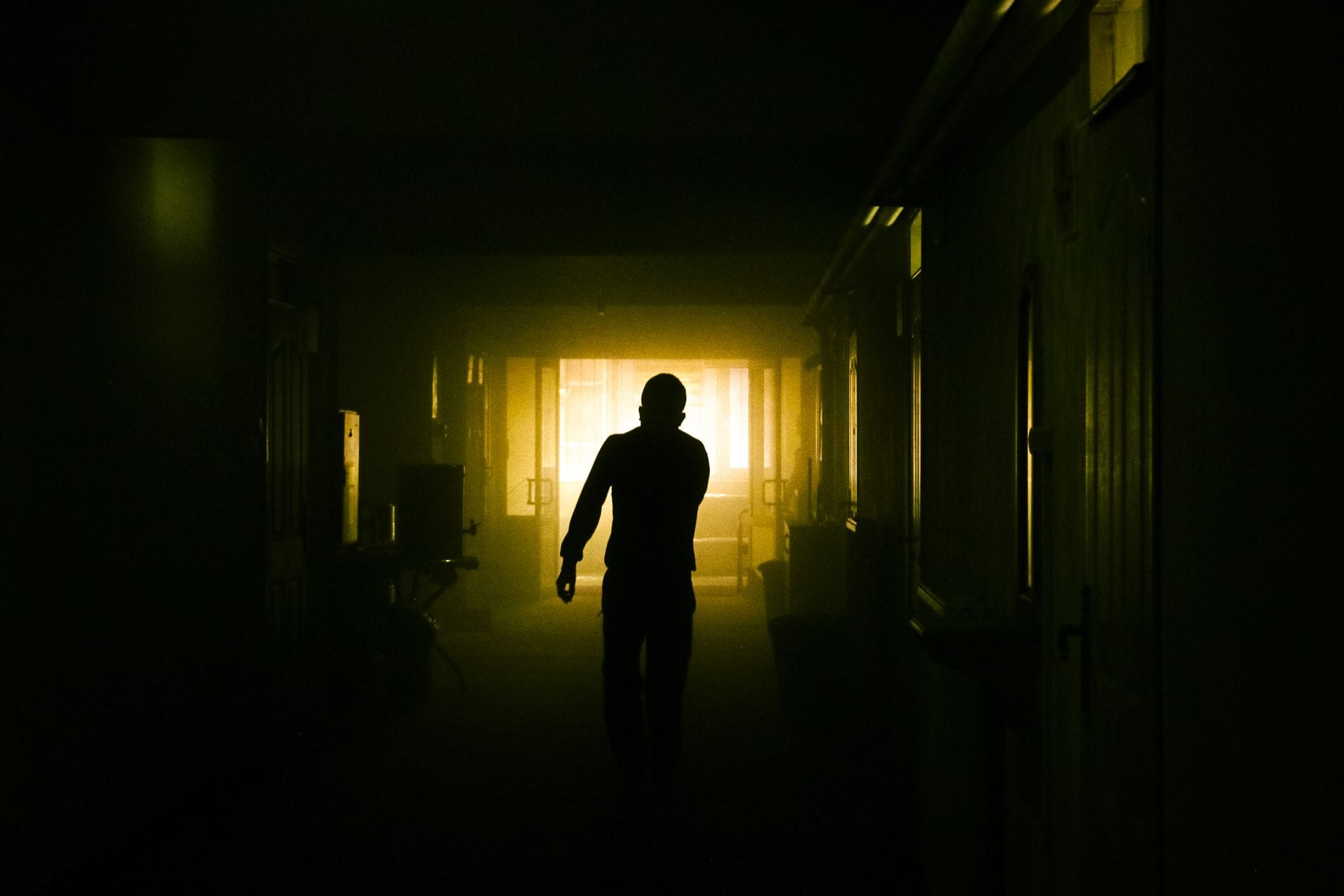
Our brains are still running the same survival software that helped early humans make it through dangerous nights. So the next time you feel a little nervous walking through a dark hallway or hear an unexplained noise after midnight, remember this:
Your brain isn’t overreacting. It’s doing exactly what it evolved to do.
Conclusion
The fear of darkness isn’t something we simply grow out of. It’s one of the oldest survival tools humans possess.
Even though the world around us has changed dramatically, our brains haven’t forgotten the lessons learned over thousands of generations. Darkness still limits our vision, increases uncertainty, and encourages our minds to stay alert for possible danger.
Understanding where this fear comes from doesn’t just make it less mysterious—it reminds us how incredible the human brain really is. Every racing heartbeat, every moment of caution, and every glance into a dark room is part of an ancient system designed to protect us.
So the next time darkness makes you pause, don’t be embarrassed. You’re experiencing a survival instinct that has helped humanity endure for thousands of years.
F.A.Q.
Humans evolved to be cautious at night because darkness reduced visibility and increased the risk of predators and other dangers.
Yes. Mild fear of darkness is a common human response rooted in evolutionary survival instincts.
Nyctophobia is an intense and persistent fear of darkness that can interfere with daily life and may require treatment.
In low light, the brain fills in missing visual information, making ordinary objects appear threatening.
Absolutely. While many people outgrow childhood fears, the underlying survival instinct remains throughout adulthood.