
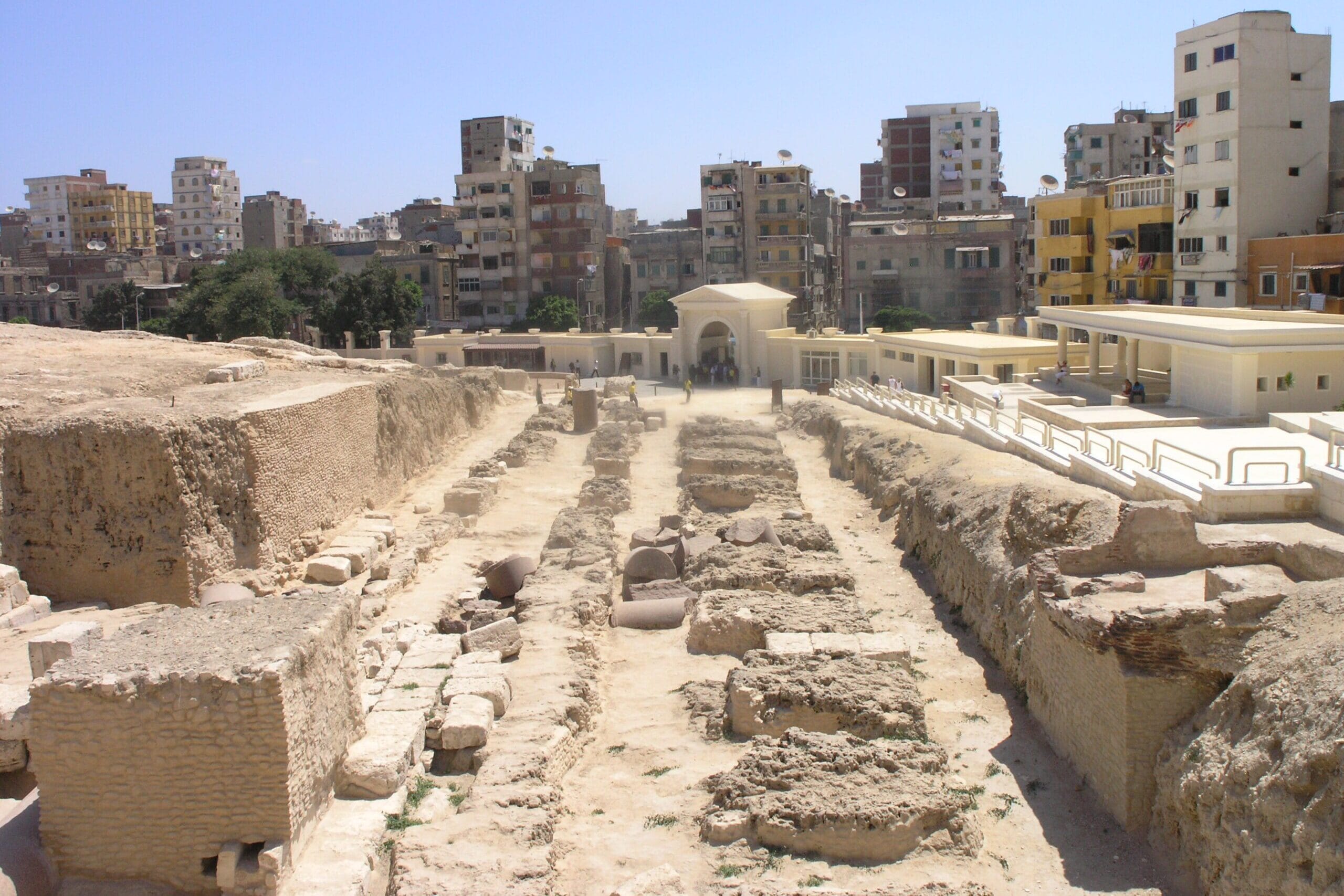
For centuries the legendary Library of Alexandria has been surrounded by whispers—a place many believe held the greatest collection of knowledge the ancient world had ever seen. Some historians call it mankind’s first true universal library. Some say it held dangerous discoveries, lost science, and texts so powerful they disappeared forever when the library was destroyed.
Was the library’s destruction a tragic accident of history?
Had the old knowledge been deliberately erased?
The mystery continues to enthrall historians, archaeologists, conspiracy theorists, and lovers of ancient civilizations alike.
The Birth of the Greatest Library in the World
The Library of Alexandria was founded in the city of Alexandria in the 3rd century BC under the rule of Ptolemy I Soter. It was supposed to collect all the knowledge in the world.
The ancient scholars crossed continents, bringing scrolls from the following:
- Greece
- Egypt
- Persia (Iran)
- India
- Rome
- Mesopotamia
Estimates of the library’s holdings vary widely, but some ancient sources claimed that it held more than 400,000 scrolls.
The library was connected with the famous Mouseion, a vast research institution that brought together philosophers, mathematicians, astronomers, and inventors centuries before the existence of modern universities.
What Knowledge Was Concealed Within?
What the library actually contained is one of the great mysteries of history.
Historians say the collection included the following:
- Advanced astronomy classes
- Discoveries in mathematics
- medical science
- Ancient World Maps
- Philosophical writings
- Engineering ideas
- Sacred Texts of Different Religions
Some theories suggest the library may have housed the following:
- Lost inventions of ancient civilizations
- Early ideas about steam-powered machines
- Knowledge of astronomy far in advance of its time
- Egyptian scientific methods that have been forgotten
Most of these texts are lost, so we may never know how advanced ancient civilizations really were.
Gone Forever, Old Science
Many scholars believe with the loss of the library, humanity may have lost centuries of scientific advancement.
Some of the ancient inventors, such as Hero of Alexandria, built amazing machines, including early steam-powered devices and machines that worked automatically.
Some historians wonder:
- Is it possible that ancient scientists had technologies that were reinvented centuries later?
- Were cures and treatments locked away in lost medical texts?
- Were there maps of civilizations now buried under oceans or deserts?
And while some of the claims are exaggerated, the loss of so many original manuscripts left huge gaps in the timeline of human history.
Who Burned the Library of Alexandria?
And the most haunting mystery is how such an important site disappeared.
There is no known single event that completely destroyed the library. Instead, historians believe it suffered damage in multiple waves over centuries.
Possible reasons are the following:
Siege of Julius Caesar
Fires in the harbor of Alexandria may have spread and damaged parts of the library during Caesar’s Civil War in 48 BCE.
Religious Wars
As tensions rose in the Roman Empire, both political and religious, pagan centers of learning were likewise targeted.
A Slow Slide
Some historians think the decline of the library was gradual over time due to lack of funding, wars, and political instability, rather than due to a devastating fire.
Its destruction is a mystery that only adds to the legend.
The Forbidden Knowledge Hypothesis
One popular modern theory is that the library contained forbidden knowledge and that powerful groups wanted it eradicated.
These theories indicate the library may have preserved the following:
- Old-time knowledge of the soul
- Challenging authority with science
- Official records have forgotten historical truths
- Knowledge handed down from still earlier civilizations
There is little direct evidence to support these claims, but the mystery remains because so much information really did go missing.
When knowledge disappears, imagination takes its place.
Are There Still Scrolls Out There?
Traces of lost Alexandrian texts are still being sought by archaeologists and historians.
Some believe that copies of ancient manuscripts survived in
- Secret Monasteries
- Private collections
- Middle East Antiquity Archives
- Tombs under earth
Sometimes they resurface in fragments through archaeological discoveries, giving us tiny glimpses of what humanity might have lost.
The dream of finding lost knowledge remains a global fascination today.
Why the Library of Alexandria Matters Still
The tale of the Library of Alexandria is more than a mere ancient tragedy.
It stands for:
- The weakness of human understanding
- The Peril of Censorship and War
- The ceaseless quest for knowledge of mankind
- Fear of history lost forever
In the digital age when information can quickly disappear, the fall of Alexandria seems disturbingly relevant.
The library stood as a symbol of enlightenment and loss, a reminder that civilizations rise with knowledge but can also fall when it is destroyed.
Conclusion
The Library of Alexandria is one of the biggest unsolved mysteries in history.
Whether the library held common manuscripts or revolutionary discoveries forever lost to history, its obliteration altered the trajectory of human civilization. The notion of priceless knowledge going up in smoke and ashes is still a source of books, documentaries, films, and unending theories.
Maybe the real puzzle is not just what was lost—but what humanity might have been had those old scrolls survived.