
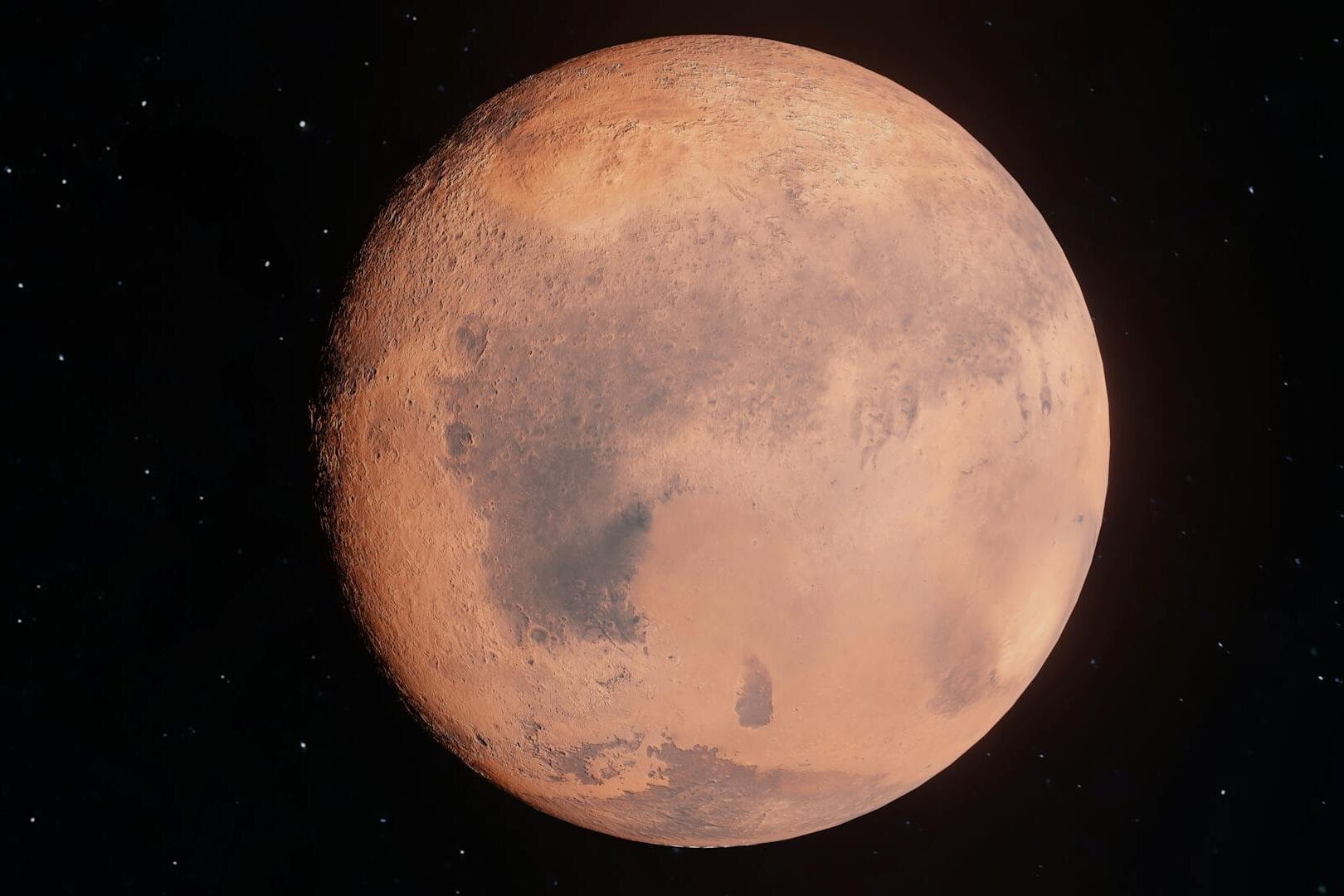
For decades, humans have been fascinated by Mars. Science fiction movies show huge cities under transparent domes and humans walking freely across dusty red landscapes. But beyond the movie visions, there’s a serious scientific question:
“Could humans actually survive on Mars?”
The answer is interesting and complex. Scientists increasingly believe that one day humans might be able to live on Mars. But that would require advanced technology, careful planning, and overcoming challenges unlike anything humanity has ever faced.
Now let’s get to the real science of colonizing Mars.
Why Mars is the Best Candidate for Humanity
In the solar system, Mars is frequently considered Earth’s nearest relative. It is still very hostile, but it has many characteristics that make it more habitable than many other worlds:
- A day on Mars (sol) is around 24.6 earth hours
- Frozen water present below the surface
- Seasons like Earth
- Atmosphere containing carbon dioxide useful for producing oxygen
- Relatively mild temperatures compared to planets like Venus
Scientists believe that future technologies could transform local Martian resources into usable necessities.
But Mars is a deadly place for humans without protection.
The biggest problem: Breathing on Mars
Humans, you can’t just walk outside onto Mars.
Mars’ atmosphere includes the following:
- carbon dioxide at about 95%
- Oxygen less than 1%
- Very low atmospheric pressure
But without a spacesuit, the air is too thin to breathe. A person would pass out pretty soon.
Future Mars habitats would need to:
- Oxygen Generating System
- System for Air Recycling
- Spaces under pressure
- Backup emergency systems.
There are already experiments demonstrating the potential for specialized devices to convert Martian carbon dioxide into oxygen.
Producing Food on Mars
One of the biggest questions for long-term colonization is food. It wouldn’t be practical or cheap to ship food from Earth all the time. Colonists would probably have to grow their own food.
Possible ways to farm on Mars are the following:
Hydroponic
Growing plants without soil using water rich in nutrients.
Aeroponic
The plants dangle their roots in the air and are fed via misting systems.
Controlled Environment Agriculture (C.E.A.)
Future Mars farms could use the following:
- Artificial light
- Temperature control
- Recycling water
- Controlling carbon dioxide
Possible crops could be the following:
- Potatoes
- Lettuce
- Wheat
- Tomatoes
- Beans
Scientists have already tried growing plants in soil similar to that of Mars.
Water: The Vital Resource
Water in liquid form is essential to life.
There is evidence of large amounts of frozen water beneath the polar ice caps and in underground reservoirs on Mars.
Water for future colonies can be obtained by:
- Subsurface ice mining
- Melt frozen deposits
- Wastewater recycling
- Trapping atmospheric moisture
Every drop counts, so water recycling systems would need to be efficient.
The problem of gravity
Gravity. One of the strangest challenges.
Mars has only about 38% of Earth’s gravity.
Scientists have not yet figured out fully what long-term exposure to reduced gravity would do to the human body.
Possible health hazards include:
Loss of Muscle
Muscle weakening is already happening to astronauts on long space missions.
Loss of Bone Density
Bones can become weak without the normal stress of gravity.
Cardiovascular System Changes
The heart may react differently in low-gravity conditions.
Developmental Problems
There are still questions about pregnancy and child development in Martian gravity.
Much work remains in the long term.
The Hidden Danger Space Radiation
Mars lacks the magnetic field that protects Earth.
That means astronauts would be exposed to dangerous levels of the following:
- The solar radiation
- Cosmic rays
- High-energy particles
Prolonged exposure may increase risks of the following:
- Neoplasms (Tumors)
- DNA damage.
- Neurological issues
- Immune system disorders
Some possible solutions are the following:
- Subterranean habitats
- Thick walls of defense.
- Radiation shielding materials
- Martian-soil-covered habitats
Many scientists believe future Martian houses may be partly underground.
The Psychological Impact of Living on Mars
Survival is more than physical.
Mental health could be one of the toughest hurdles.
Now, picture this:
- Millions of kilometers away from Earth
- Every day, seeing the same people
- Less personal space
- Late communication
- Years of separation
Psychological challenges may include:
- Anxiety
- Depression
- Stress
- The solitude
- Social conflicts
Research on astronauts and isolated environments on Earth suggests mental health will need the following:
- Recreational pursuits
- Social interaction.
- Virtual reality environments
- Regular patterns
- Support for mental health
Technology could matter as much as the human mind.
Are We Going to See Humans Building Cities on Mars?
Some scientists imagine Martian settlements beginning as small research stations and expanding into large communities.
Future possible developments:
- Ecosystems that can sustain themselves
- Subterranean cities
- Support systems with artificial intelligence.
- Updated transportation networks
- Local production from Martian materials
The process would probably happen slowly:
Exploration → Research Stations → Permanent Settlements → Self-Sustaining Colonies
So, Can Humans Survive on Mars?
The scientific answer is:
“Not simply, but perhaps.”
Humans can live on Mars with advanced technology, carefully designed habitats, sustainable food systems, radiation protection, and solutions for long-term physical and psychological challenges.
Mars will not be a second Earth anytime soon. Instead, it might be humanity’s greatest engineering challenge, one of our most ambitious adventures.
The question is no longer simply can we get to Mars.
The larger question may be
“How much are we willing to change ourselves to fit in there?”