Everything on Earth is driven by the sun. It provides light and heat and the force of gravity that holds our planet securely in orbit through space. But what if the sun suddenly disappeared for 5 seconds and then immediately came back?
Would Earth get cold?
Will we be hurled into deep space?
How does humanity even notice?
The answers are much more interesting than most people think. The laws of physics would mean the consequences wouldn’t be immediate, but they would be dramatic.
Let’s take a look at exactly what would happen in those five terrifying seconds.
The First Shock: The Earth Would Not Notice Immediately
Most of us think that if the Sun disappeared, the sky would turn black immediately.
Not exactly.
Light travels at about 299,792 kilometers, or 186,282 miles, per second. The Sun is 150 million km (93 million miles) away, so it takes about 8 minutes and 20 seconds for the sunlight to reach the Earth.
That means if the Sun were to suddenly disappear right now, we would still see it as normal for another 8 minutes and 20 seconds.
The same delay also exists in gravity.
The scientific theory of general relativity says that changes in gravity travel at the speed of light. The Earth wouldn’t instantly feel the loss of the Sun.
The first 8 minutes and 20 seconds would look like everything was fine.
Minute 8:20 Darkness Comes
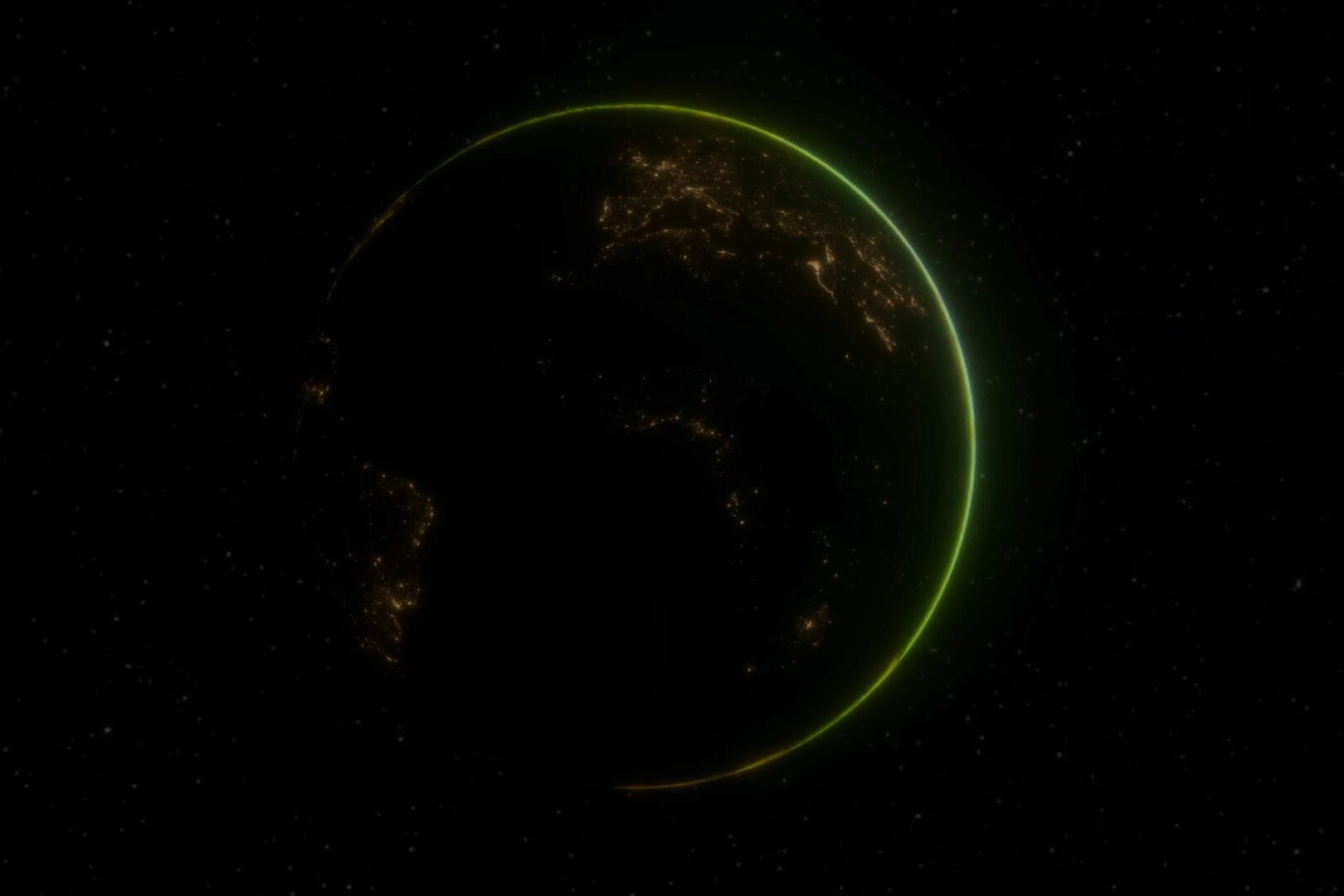
Earth would immediately lose sight of the sun. This would occur exactly 8 minutes and 20 seconds after the Sun disappeared.
The effect would be instantaneous:
- Daytime areas would be plunged into darkness.
- The Moon wouldn’t be visible since it reflects sunlight.
- The night sky would be devoid of planets.
- Solar systems would cease to produce electricity.
- Animals that rely on daylight would be confused.
To an observer it would have seemed as if an impossible cosmic switch had been thrown.
But the sun vanished only for five seconds, so this darkness would last only five seconds before sunlight came back.
What About Gravity?
Now it’s getting REALLY interesting.
The Sun contains about 99.86% of the mass of the solar system. It’s gravity that keeps Earth in stable orbit.
If the Sun were to go out completely, the Earth’s orbit would start to change immediately. But it would take the same 8 minutes 20 seconds before we noticed.
In those five seconds:
- The sun’s gravity would be gone.
- Earth would just keep going in a straight line.
- The planet would be knocked out of its orbit for a while.
Think about swinging a ball on a string. If the string suddenly breaks, the ball flies straight ahead.
Earth would be no different.
Luckily, the interruption is only for five seconds, so the deviation would be very small.
When the Sun came back, Earth would go back to its orbit, with only a tiny disturbance.
Without very precise instruments, man would probably never be aware of the orbital shift.
Would the Earth start to freeze?
Not at once.
The thermal inertia of the Earth is very large.
The land, ocean, and atmosphere take a long time to warm up.
If sunlight were lost for five seconds, only a tiny fraction of incoming solar energy would be lost.
For comparison:
- Night already lasts for many hours.
- The sun is often hidden for long stretches behind clouds.
- Seasons change the energy by much larger amounts.
Global temperature would not change very much.
Almost no one would even see a difference.
What Would Astronomers Observe?
It would be one of the biggest events of all time for astronomers.
They would receive:
- Sun suddenly disappearing.
- A small break in solar radiation.
- Transient gravity variations.
- Solar wind measurement abnormalities.
All scientific instruments in the world would immediately begin recording unprecedented data.
It would probably be the most analyzed event in the history of mankind.
Effects on Satellites and Space Vehicles
Today satellites depend heavily on solar power.
A five-second disappearance would probably lead to the following:
- Small power generation disturbances.
- Intermittent sensor confusion.
- Navigation anomalies.
“Most systems are built to have batteries and backup power, so I don’t think we would have any major failures.
Space agencies would undoubtedly take notice of the event, but catastrophic consequences would be rare.
The anomaly would immediately be investigated by organizations like NASA and the European Space Agency (ESA).
Could life exist here?
Absolutely.
Five seconds is far too little time to threaten life on Earth.
Humanity is routinely exposed to:
- Darkness of night
- Solar eclipses
- Temporary power outages
The main difference would be the global nature and the speed of the event.
People would likely be frightened and bewildered and intrigued—but not hurt.
The Real Threat: If the Sun Went Out
Five seconds would be relatively harmless, but the longer it disappears, the more catastrophic it would be.
Several Days
- The surface temperatures begin to plummet.
- Photosynthesis grinds to a near halt.
- Food chains get snapped.
Several Weeks
- The average temperature of the world is below freezing.
- Ecosystems start to break down.
- There can be no agriculture.
12 Months On
- Surface temperatures can reach -73°C (-100°F).
- Oceans freeze from the surface up.
- Life for most becomes unlivable.
Fortunately, our hypothetical lasts only five seconds.
Why This Thought Experiment Is Important
This example shows two amazing things about the universe:
1. The speed of light is bounded
We never see the sun as it is today. We see it as it was 8 minutes and 20 seconds ago.
2. Gravity Is Not Instantaneous
The changes in gravity propagate through space at the speed of light and link space and time in ways first described by Albert Einstein. The fact that the Earth would not instantly notice the Sun’s disappearance is one of the profoundest lessons of modern physics.
Conclusion
There would be no major physical consequences for humanity if the sun went out for five seconds. Earth would experience a brief period of darkness and a very minor orbital perturbation, but our planet would not freeze or shoot off into deep space.
The really amazing thing is that we wouldn’t even know that the sun was gone until more than eight minutes later.
This thought experiment underscores the interconnectedness of our universe with the cosmos and the significance of the limited speed of information propagating through space.
So the next time you look at the Sun, remember you’re looking back over eight minutes in time.